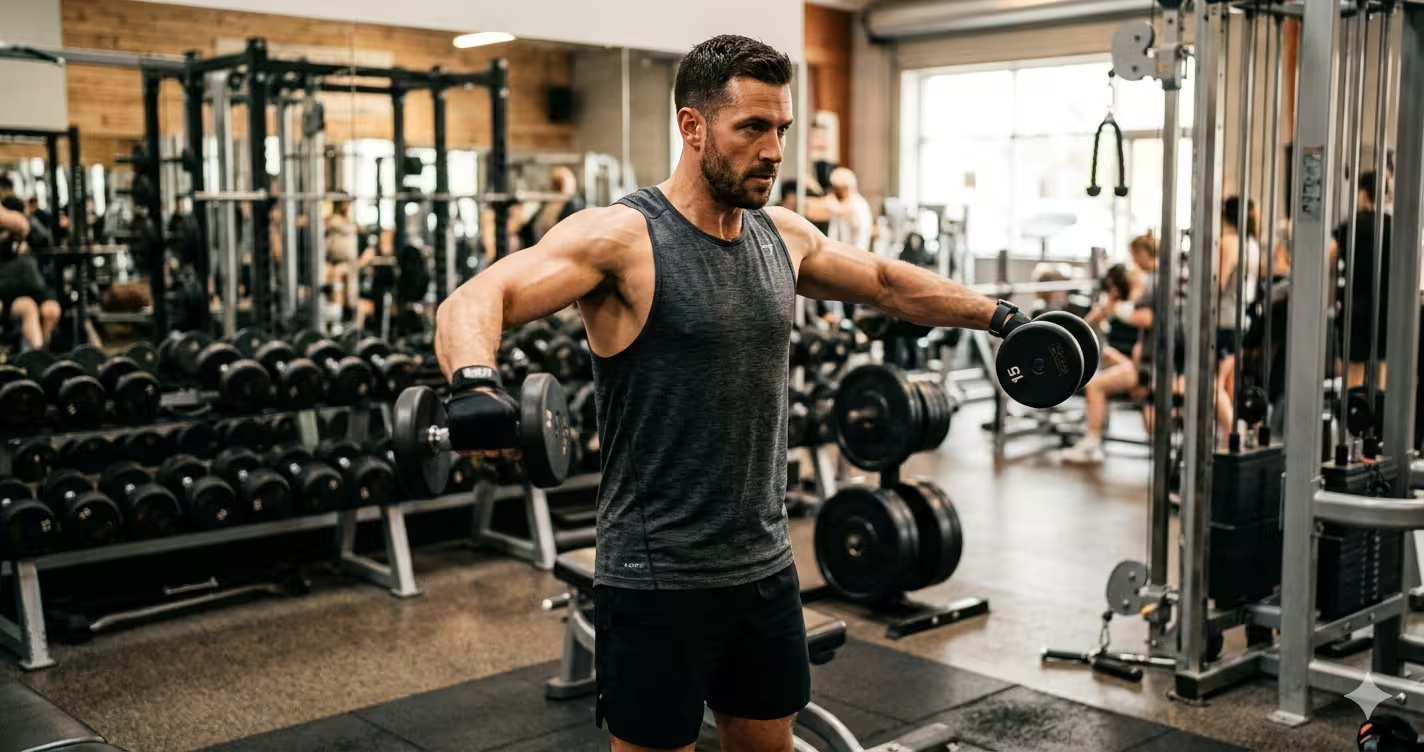
Lateral raises are a great shoulder workout, and most people love them. You’ve been doing lateral raises for weeks. But some people say they’ve been doing them for months and still haven’t seen any change. The main reason for this is that they’re doing them incorrectly.
So what’s the problem?
Most people make some common mistakes during lateral raises. The good thing is that these mistakes can be easily fixed. From here, you will understand, you will learn exactly what is going wrong and how to fix it.
First, What Are Lateral Raises For?
Lateral raises mainly target the side part of your shoulder, called the lateral deltoid. This muscle gives your shoulders that wide, round look. If you want broader shoulders and a better V-shape, this exercise is very important.
But here’s something many people don’t realize — this is a small muscle. It doesn’t need heavy weight. It needs proper control and correct movement.
Mistake #1 – Using Too Much Weight
Let’s be honest. Many people pick weights that are too heavy for lateral raises. It feels good, but it ruins the exercise.
When the weight is heavy, your body starts cheating. You swing, use your back, and your traps take over. Your side shoulder doesn’t do much work.
Fix:
Use lighter weight. Even 5–10 lbs is enough for most people. Focus on control, not showing strength.
Mistake #2 – Swinging the Body
If you’re using momentum to lift the weights, you’re not training your shoulders properly.
Swinging removes tension from the target muscle. You’re just moving weight, not building muscle.
Fix:
Stand straight, keep your core tight, and lift slowly. No jerking. If you can’t control it, go lighter.
Mistake #3 – Wrong Height
Some people lift too high, others too low.
Too high → traps take over
Too low → not enough muscle activation
Fix:
Lift until your arms are just below shoulder level. That’s the best position to hit your side delts.
Mistake #4 – Straight Elbows
Completely straight arms increase stress on joints and reduce muscle focus.
Fix:
Keep a slight bend in your elbows. Think about pushing your elbows out, not your hands.
Mistake #5 – Shrugging Shoulders
If your shoulders move up toward your ears, your traps are doing the work.
Fix:
Keep your shoulders down. Stay relaxed in your neck area. Focus only on the side delts.
Mistake #6 – Fast Reps
Doing reps quickly reduces muscle tension. That means less growth.
Fix:
Slow it down.
Lift – 2 seconds
Hold – 1 second
Lower – 2 seconds
Control every rep.

Mistake #7 – Doing Them at the End
If you do lateral raises when you’re already tired, your form will suffer.
Fix:
Do them earlier in your workout when your muscles are fresh.
Perfect Lateral Raise – Step by Step
- Use light dumbbells
- Stand tall, core tight
- Slight bend in elbows
- Shoulders down
- Lift arms to the sides
- Stop just below shoulder height
- Pause briefly
- Lower slowly
- Repeat with control
Sets and Reps
- 3 to 4 sets
- 12 to 15 reps
- Rest 45–60 seconds
Train 2–3 times per week for best results.
Simple Workout Example
- Warm-up – 2 minutes
- Lateral raises – 4 sets
- Add other shoulder exercises if needed
Keep it simple and consistent.
Mind-Muscle Focus
Before lifting, focus on your shoulder muscle. Feel it working during each rep. This improves muscle activation and gives better results.
Try These Alternatives
If dumbbell raises don’t feel right, try:
- Cable lateral raises
- Machine lateral raises
- Incline bench lateral raises
Pick the one that feels best and comfortable.
Lateral Raise Types and Shoulder Workout Plan
| Exercise Type | Best For | Advantages | Limitations | Who Should Use It |
|---|---|---|---|---|
| Dumbbell Lateral Raise | Overall shoulder development | Easy to learn, no equipment needed, great for beginners | Less tension at bottom position | Beginners & home workouts |
| Cable Lateral Raise | Constant muscle tension | Maintains tension throughout movement, better isolation | Requires cable machine | Intermediate & gym users |
| Machine Lateral Raise | Strict form and stability | Fixed path reduces cheating, safer for joints | Limited range adjustment | Beginners and injury recovery |
| Incline Bench Lateral Raise | Zero momentum training | Removes cheating completely, better muscle focus | Feels harder with light weights | Advanced users & form correction |
| Single Arm Lateral Raise | Muscle imbalance correction | Improves mind-muscle connection, fixes weaker side | Takes more time | Anyone with uneven shoulder strength |
| Day | Exercise | Sets | Reps |
|---|---|---|---|
| Monday | Dumbbell Lateral Raise | 4 | 12-15 |
| Wednesday | Cable Lateral Raise | 3 | 12-15 |
| Friday | Incline Bench Lateral Raise | 3 | 10-12 |
Final Thoughts
It’s important to be careful when doing lateral raises because if you want to see muscle growth, the lateral raises you do need to work, and if they don’t, it’s usually due to small mistakes. Improve your form by correcting your form, using lighter weights, and then slowing down your reps. Don’t focus on lifting the weight. Focus on feeling the muscles work. Stay consistent.
FAQs
1. Why do I feel lateral raises in my neck instead of shoulders?
This usually happens when you lift too heavy or shrug your shoulders. Use lighter weights and keep your shoulders down.
2. How long does it take to see results from lateral raises?
With proper form and regular training, you can notice changes in 4–8 weeks.
3. Can beginners do lateral raises?
Yes, beginners can start with very light weights and focus on correct form.
4. Are lateral raises enough for shoulder growth?
They help build side delts, but for full shoulder development, combine them with other exercises like presses.