Protein intake calculator is a very essential tool for all of you because building muscle is hard work. You lift heavy weights, sweat, and go through tough workouts. But if you don’t calculate and consume enough protein, none of that effort will give you the results you want.
Why Protein Matters for Your Muscles
Think of your muscles like a brick wall. Every time you lift weights, you knock a few bricks loose. That is a normal part of the process. After your workout, your body fixes those loose bricks—but to do that, it needs new materials.
Protein provides those materials.
When you digest protein, your body breaks it down into amino acids. These amino acids travel to your muscles to repair the workout damage. Your body doesn’t just fix the wall exactly how it was before; it builds it back slightly stronger and thicker. That is muscle growth.
Without enough protein, the repair job stalls. You stay sore longer, progress plateaus, and in worst-case scenarios, your body can break down existing muscle tissue to get the amino acids it needs.
The Problem with One-Size-Fits-All Advice
You have probably heard blanket statements like, “Eat one gram of protein per pound of body weight,” or “Everyone needs 200 grams a day.”
These numbers might work for some, but they don’t work for everyone.
A 250-pound football player requires more protein than a 120-pound runner. A bodybuilder training twice a day needs more than someone lifting weights three times a week. Your exact protein needs depend on:
- Your current body weight
- Your training frequency and intensity
- Your age
- Your primary goal (gaining muscle, losing fat, or maintaining)
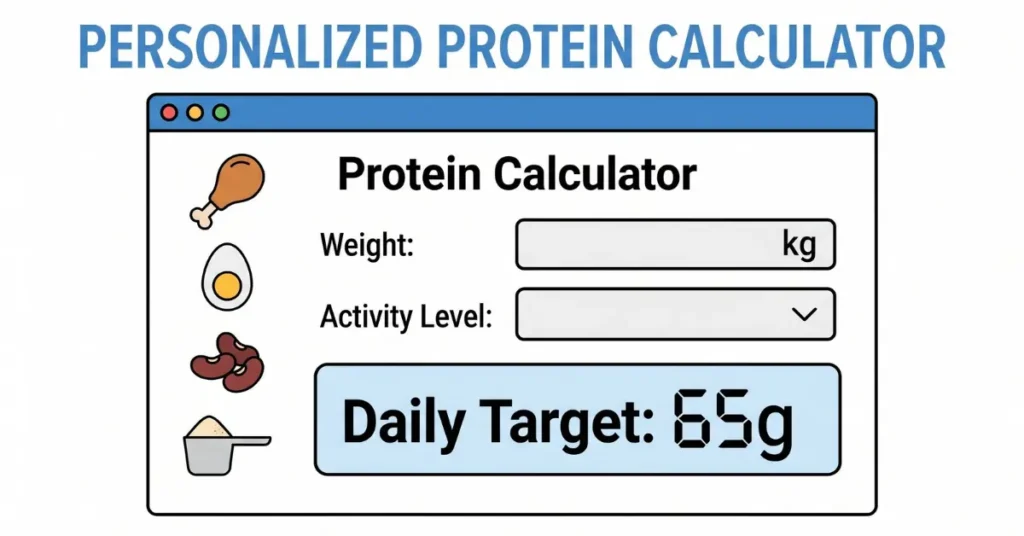
A personalized calculation ensures you aren’t wasting money on excess protein or shortchanging your recovery.
How to Calculate Your Protein Needs
Personalized Protein Calculator
This is the foundational formula that most reliable fitness calculators use behind the scenes.
- If you use pounds: Aim for 0.7 to 1.0 grams of protein per pound of body weight.
- If you use kilograms: Aim for 1.6 to 2.2 grams per kilogram.
Example Calculations
For a 150-pound lifter:
- 150 lbs × 0.7 = 105 grams per day (Minimum)
- 150 lbs × 1.0 = 150 grams per day (Maximum)
- Daily Target Range: 105–150 grams. Most people see better results at the higher end of this range if they train intensely.
For a 200-pound lifter:
- 200 lbs × 0.7 = 140 grams
- 200 lbs × 1.0 = 200 grams
- Daily Target Range: 140–200 grams.
Adjusting for Different Goals
The baseline formula changes slightly depending on your specific body composition goals:
- To Build Muscle: Stick to 0.8 to 1.0 grams per pound. This gives your body a constant surplus of recovery material.
- To Lose Fat Without Losing Muscle: Bump it up to 1.0 to 1.2 grams per pound. When calories are low, your body is more tempted to burn muscle for energy. Extra protein protects your hard-earned muscle.
- To Maintain: 0.6 to 0.8 grams per pound is plenty to maintain your current shape.
- For Beginners: Start at 0.7 grams per pound. New lifters build muscle relatively easily and don't require massive amounts of protein right away.
- For Experienced Lifters: Aim for the full 1.0 gram per pound. The closer you get to your genetic potential, the harder your body has to work to build new tissue.
What a Day of Protein Actually Looks Like
Numbers on paper don't mean much until you turn them into actual food. Here is how to hit these targets using normal meals.
Daily Plan for a 130-Gram Target
- Breakfast: 3 eggs and a cup of Greek yogurt (~35g)
- Lunch: 5oz chicken breast with rice (~40g)
- Snack: 1 scoop of protein powder (~25g)
- Dinner: 5oz fish with vegetables (~30g)
- Total: 130 grams
Daily Plan for a 170-Gram Target
- Breakfast: 4 eggs and a cup of cottage cheese (~45g)
- Lunch: 8oz chicken breast with rice (~70g)
- Snack: 1 scoop of protein powder (~25g)
- Dinner: 6oz lean beef (~45g)
- Total: 185 grams
Spreading your protein intake across 3 to 4 meals makes it significantly easier to hit your numbers without feeling uncomfortably full at dinner.
Common Protein Mistakes to Avoid
- Backloading Your Day: Eating 10 grams of protein at breakfast and 100 grams at dinner is inefficient. Your body handles protein better when it is distributed evenly throughout the day.
- Relying Solely on Shakes: Protein powder is a supplement, not a meal replacement. Get the bulk of your nutrients from whole foods like meat, fish, eggs, dairy, beans, and lentils.
- The "More is Always Better" Myth: Eating 2.0 grams per pound won't double your muscle growth. Your body will simply burn the excess for energy or store it. Stay within the recommended ranges.
- Skipping Rest Days: Muscles repair and grow when you are resting, not while you are lifting. Keep your protein intake consistent on days off.
Simple Habits to Hit Your Target
- Prioritize Protein First: When you sit down to eat, finish the protein portion of your plate before filling up on sides and carbs.
- Keep Zero-Prep Snacks Handy: Hard-boiled eggs, Greek yogurt, canned tuna, and cottage cheese require zero cooking time.
- Upgrade Your Current Meals: Stir a scoop of unflavored collagen or whey into your morning oatmeal, or mix cottage cheese into scrambled eggs for a texture and protein boost.
- Track for One Week: You don't have to track forever. Use a free app like MyFitnessPal for just seven days to get an accurate visual baseline of how much protein you are actually eating.
Frequently Asked Questions
Can I eat too much protein?
For healthy individuals, excess protein is rarely dangerous, but it can cause digestive discomfort and displaces other essential nutrients like healthy fats and carbohydrates.
Do I need protein powder?
No. It is purely a tool for convenience. Whole food is always preferable, but a shake is a helpful backup plan if you are short on time.
How do I hit my goals on a plant-based diet?
Focus on dense plant sources: tempeh, seitan, tofu, lentils, chickpea pasta, and soy milk. You may want to aim for the higher end of the protein range, as plant proteins have slightly lower absorption rates than animal proteins.
Do I need to drink a shake immediately after working out?
The "30-minute anabolic window" is a myth. Total daily protein intake matters far more than precise timing. Just eat a high-protein meal within a couple of hours of training.
Conclusion
You may not be able to eat the exact amount of protein every day. Try to get your protein intake to 80% to 90% of the time, be consistent with your training, and the results will come before you know it.
Find your number, plan your shopping list, and give your body the fuel it needs to recover.