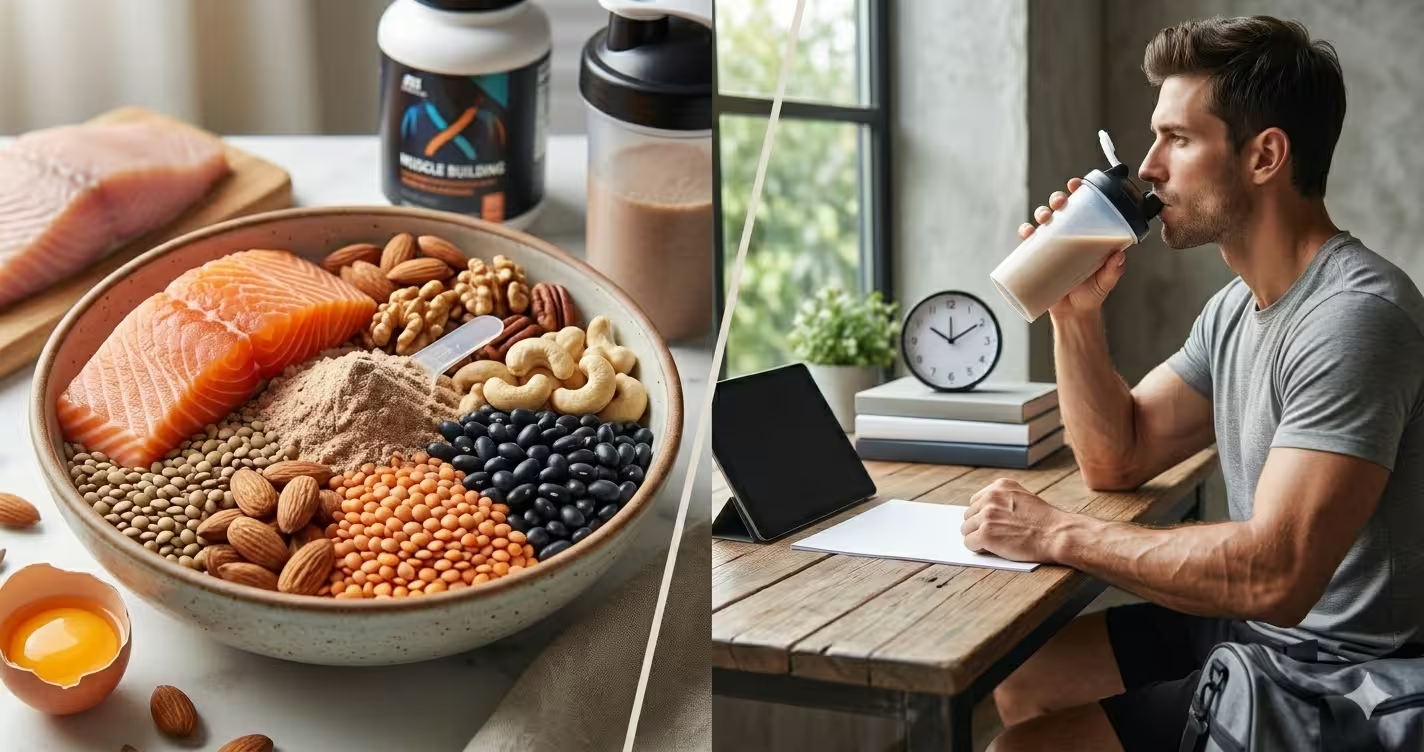
Some people wonder if there is a specific time to consume protein, especially after starting to go to the gym. You can get the answer to this question here. Here is a detailed explanation about consuming protein, especially about the timing.
First, a Quick Reminder: Total Protein Matters Most
Before we talk about timing, remember this: Your total daily protein intake is the king. If you eat only 50 grams of protein per day, no amount of perfect timing will build muscle. If you eat 150 grams per day spread out randomly, you will still build muscle.
Timing is the cherry on top. It helps. But it is not magic.
For muscle growth, aim for 1.6 to 2.2 grams of protein per kilogram of body weight (or 0.7 to 1 gram per pound). A 150-pound person needs about 105 to 150 grams of protein per day. Get that right first. Then worry about timing.
Now, let us talk about when to eat that protein.
1. The Post-Workout Window (Within 2 Hours)
This is the most talked-about timing. After you exercise, your muscles are damaged and sensitive to nutrients. They are ready to absorb protein and start repairing.
What does science say? For many years, people believed in a “30-minute anabolic window.” They said you had to drink a protein shake immediately after your last rep. Newer research shows the window is much wider. You have about 2 hours after your workout to get protein for maximum benefit.
Why it matters: After exercise, your muscle cells are more sensitive to amino acids. They pull in protein faster. Eating protein within 2 hours helps:
- Repair damaged muscle fibers
- Start the muscle building process
- Reduce muscle breakdown
- Improve recovery for your next workout
How much to take: 20 to 40 grams of high-quality protein. That is about one scoop of whey, 3 to 4 eggs, 150 grams of chicken, or 200 grams of Greek yogurt.
Best protein sources post-workout: Whey protein is ideal because it digests quickly. But real food works just as well if you eat within 2 hours. Eggs, chicken, tuna, or Greek yogurt are excellent.
What about cardio? If you do cardio (running, cycling), you also need protein after to repair muscles. The same 2-hour window applies. But you need less protein – about 15 to 25 grams.
Beginner tip: If you finish your workout at 6 PM and eat dinner at 7 PM, you are fine. You do not need a separate shake. Just make sure your dinner has protein.
2. Pre-Workout Protein (1 to 2 Hours Before)
Eating protein before your workout also helps muscle growth. It gives your body a steady supply of amino acids during exercise.
What does science say? Eating protein before a workout increases muscle protein synthesis during and after your session. It also reduces muscle breakdown. Some studies show that pre-workout protein is just as important as post-workout protein.
How much to take: 20 to 30 grams of protein, 1 to 2 hours before exercise.
What to eat: Choose something that digests easily. A small chicken breast, a few eggs, Greek yogurt, or a protein shake. Avoid heavy, fatty foods that sit in your stomach. You do not want to feel sick while lifting.
Example: If you work out at 5 PM, eat a protein-rich snack at 3:30 or 4 PM. A banana with peanut butter, a protein bar, or a small smoothie.
Is pre-workout protein necessary? No, if you ate a protein-rich meal 2 to 3 hours before. Your body still has amino acids circulating. But if it has been 4 or 5 hours since your last meal, a pre-workout snack helps.
Beginner tip: Experiment. Some people feel great with pre-workout protein. Others feel bloated. Listen to your body.
3. Before Bed (Casein Protein)
While you sleep, your body repairs muscles. But you are not eating for 7 to 9 hours. Your body needs a slow, steady supply of protein during that time.
What does science say? Eating protein right before bed increases muscle protein synthesis overnight. Studies show that 30 to 40 grams of casein protein before sleep improves muscle growth and recovery. The effects are even better if you worked out that evening.
What is casein? Casein is a slow-digesting protein. It forms a gel in your stomach and releases amino acids slowly over 6 to 8 hours. This is perfect for overnight.
Best sources of casein:
- Cottage cheese (very high in casein)
- Greek yogurt (mostly casein)
- Milk (80% casein, 20% whey)
- Casein protein powder
How much to take: 30 to 40 grams of casein protein. That is about 1.5 cups of cottage cheese, 2 cups of Greek yogurt, or one scoop of casein powder.
Do you need a special powder? No. Real food works perfectly. A bowl of cottage cheese or Greek yogurt before bed gives you slow-release protein plus other nutrients.
Will it make you fat? No, if it fits your daily calories. A serving of cottage cheese has about 150 to 200 calories. That is fine for most people. If you are trying to lose weight, account for those calories in your daily total.
Beginner tip: Try cottage cheese with berries and a drizzle of honey. It tastes like dessert but builds muscle while you sleep.
4. Morning Protein (Breakfast)
After sleeping for 7 to 9 hours, your body has used up many of its amino acids. Eating protein at breakfast starts the muscle-building process for the day.
What does science say? Studies show that eating a protein-rich breakfast improves muscle protein synthesis throughout the day. It also helps control hunger and prevents overeating later.
How much to take: 20 to 40 grams of protein at breakfast.
What to eat: Eggs, Greek yogurt, cottage cheese, a protein smoothie, or leftover chicken from dinner. Even a glass of milk with your oatmeal helps.
The problem with typical breakfasts: Many people eat cereal, toast, or pastries for breakfast. These are mostly carbs and sugar. They give you energy but do not help muscle growth. Swap to a protein-rich breakfast.
Examples of high-protein breakfasts:
- 3 scrambled eggs + 1 slice whole wheat toast (21g protein)
- 1 cup Greek yogurt + handful of nuts (20g protein)
- Protein smoothie: 1 scoop whey, 1 cup milk, banana (30g protein)
- Leftover chicken and vegetables from dinner (30g+ protein)
Beginner tip: If you are not hungry in the morning, start small. Drink a glass of milk or a protein shake. Even 15 grams is better than zero.
5. Spreading Protein Evenly Across the Day
This is the most important timing tip for most people. Instead of eating most of your protein at dinner, spread it across 3 to 5 meals.
What does science say? Your body can only use so much protein at one time for muscle building. Studies suggest that 20 to 40 grams per meal is the sweet spot. Eating more than 50 grams in one meal does not give extra muscle benefit. The extra protein is either used for energy or stored as fat.
The ideal pattern:
- Breakfast: 30g protein
- Lunch: 30g protein
- Afternoon snack: 20g protein
- Dinner: 30g protein
- Before bed (optional): 30g protein
That totals 140 grams. Perfect for a 150 to 170 pound person.
Why spreading helps: Your muscles are constantly repairing and building. A steady supply of amino acids keeps the process running all day. If you eat all your protein in one meal, your muscles go without for many hours.
What if you cannot eat 5 meals? No problem. Three meals with 30 to 40 grams each works well. Just try to avoid eating 100 grams in one sitting and very little the rest of the day.
Beginner tip: Use your hand to estimate. A palm-sized serving of meat, fish, or paneer is about 20 to 30 grams. A cup of dal or yogurt is about 15 to 20 grams. An egg is 6 grams. Add them up through the day.
Putting It All Together: A Sample Day
Here is how a perfect protein timing day looks. This person weighs 160 pounds and needs about 130 grams of protein.
| Time | Meal | Protein | Notes |
|---|---|---|---|
| 7:00 AM | Breakfast: 3 eggs + 1 slice cheese | 22g | Morning protein |
| 10:00 AM | Snack: 1 cup Greek yogurt | 15g | Spreading intake |
| 12:30 PM | Lunch: 150g chicken breast + rice | 35g | Midday protein |
| 3:30 PM | Pre-workout snack: 2 tbsp peanut butter on apple | 8g | Fuel for gym |
| 5:00 PM | Workout | – | – |
| 6:30 PM | Post-workout dinner: 150g fish + quinoa + vegetables | 35g | Within 2-hour window |
| 9:30 PM | Before bed: 1 cup cottage cheese | 25g | Slow-release overnight |
| Total | 140g | Perfect |
Notice that protein is spread across 6 small meals. The post-workout meal is within 2 hours. And there is a bedtime snack.
You do not need to copy this exactly. Use it as a guide.
What If You Work Out Fasted (Morning)?
Some people exercise first thing in the morning before eating. Is that bad for muscle growth?
The issue: When you wake up, you have not eaten for 7 to 9 hours. Your body is in a fasted state. Working out without protein increases muscle breakdown.
The solution: If you must work out fasted, eat protein immediately after. Within 30 minutes is best because your muscles are very sensitive. A fast-digesting protein like whey or a few eggs works well.
Better option: Eat a small pre-workout snack. Even 10 to 15 grams of protein (a glass of milk or a boiled egg) 30 minutes before your workout helps reduce muscle breakdown.
Beginner tip: If you feel fine working out fasted and you eat a good breakfast right after, you will still build muscle. Do not stress. Consistency matters more.
Does Protein Timing Matter for Weight Loss?
Yes, but differently. When you are losing weight, you want to preserve muscle while losing fat. Protein timing helps.
- Eat protein at every meal to stay full longer.
- A high-protein breakfast reduces cravings all day.
- Post-workout protein protects muscle during calorie restriction.
- Bedtime protein may help with overnight muscle preservation.
The same timing rules apply. But your total protein should be on the higher end (1.8 to 2.2 grams per kg) to prevent muscle loss.
Common Myths About Protein Timing
Myth 1: You must drink a shake within 30 minutes or you lose gains.
False. The window is about 2 hours. And total daily protein matters more. A shake at 90 minutes is fine.
Myth 2: You cannot eat protein before bed because it turns to fat.
False. Protein before bed is used for muscle repair overnight. It only turns to fat if you eat way above your calorie needs.
Myth 3: Whey is the only good post-workout protein.
False. Real food works just as well. Whey is convenient, not magical.
Myth 4: You need protein every 3 hours exactly.
False. Every 4 to 5 hours is fine. Your body has a pool of amino acids. Missing one snack does not ruin your gains.
Myth 5: Casein is useless if you eat dinner late.
False. Even if you eat dinner at 8 PM and sleep at 10 PM, bedtime protein helps. Your body still goes 8+ hours without food. Casein fills that gap.
Summary: Best Time to Take Protein for Muscle Growth
Here is the simple version. Use this as your cheat sheet.
| Time | Recommendation | Protein Amount |
|---|---|---|
| Morning (breakfast) | Eat protein within 1 hour of waking | 20-40g |
| Pre-workout | Eat 1-2 hours before exercise (optional) | 20-30g |
| Post-workout | Eat within 2 hours after exercise | 20-40g |
| Between meals | Spread protein evenly across 3-5 meals | 20-40g per meal |
| Before bed | Eat slow-digesting protein (casein) | 30-40g |
The most important rule: Get your total daily protein first. Then worry about timing. A perfect schedule with 100 grams of protein is worse than a random schedule with 150 grams.
Final Words
You will understand the timing of protein intake. The things mentioned here will change your fear about timing. An important factor is sleep. Casein protein works during sleep, that is, it is digested slowly. This is why it is said that it is good to consume this protein at night.