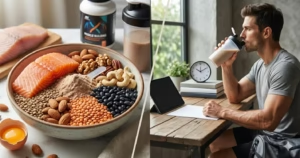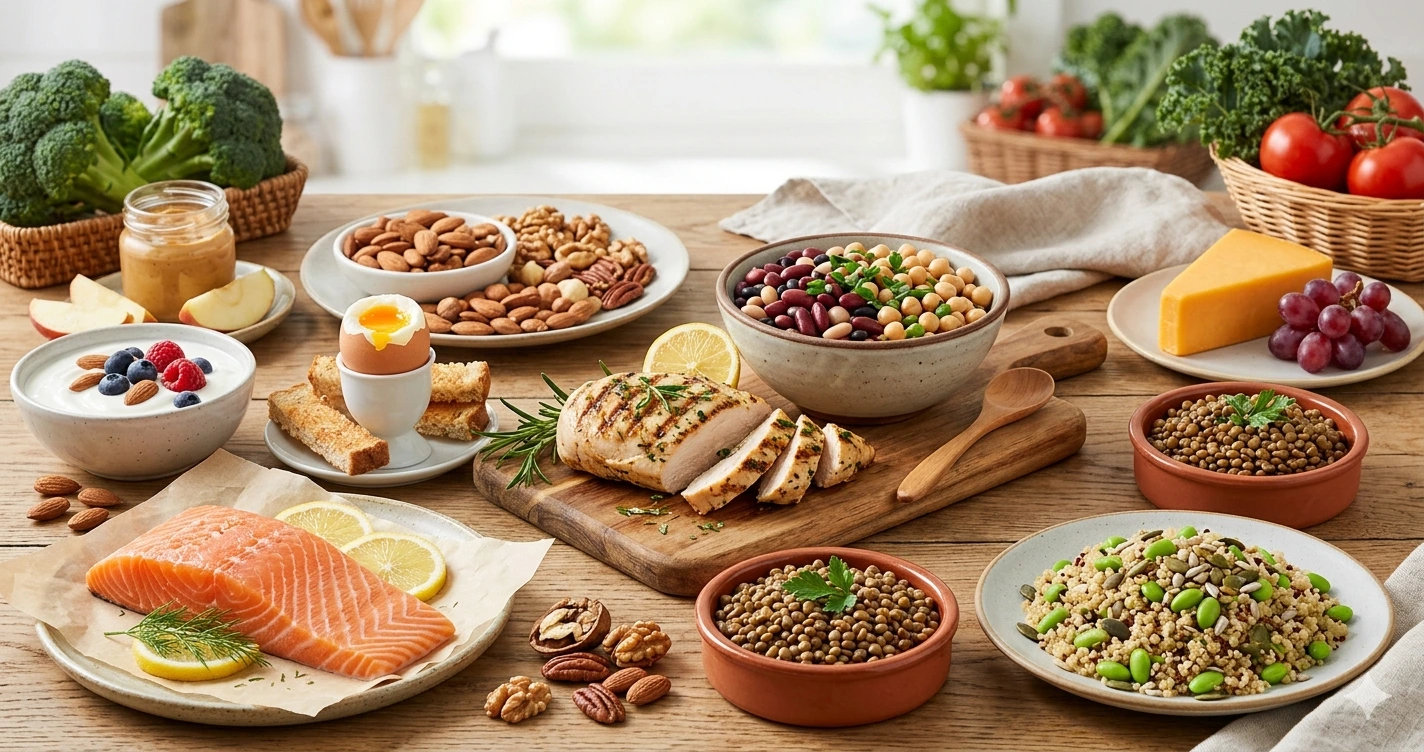
These days, protein-rich foods are everywhere, but it’s better to make your own healthy ones. You don’t need supplements to get enough protein. Real, natural foods will provide you with more than enough protein.
They are cheap, healthy, and easy to incorporate into your daily diet. Here are the top 10 natural protein sources that are perfect for beginners.
1. Eggs
Eggs are one of the easiest and cheapest protein sources.
Protein: 1 egg = 6 grams
Why they are great:
- Complete protein (all amino acids)
- Very cheap and quick to cook
- Works for any meal
Easy ways to eat:
- Boiled eggs for snacks
- Scrambled eggs for breakfast
- Fried eggs on toast
Tip: Boil 6–8 eggs at once and store them in the fridge.
2. Greek Yogur
Greek yogurt is thick, creamy, and full of protein.
Protein: 150g = 15 grams
Why it is great:
- No cooking needed
- Good for digestion
- Keeps you full longer
Easy ways to eat:
- Add fruits like banana or berries
- Mix with honey and nuts
- Use as a dip or side
Tip: Always choose plain yogurt to avoid extra sugar.
3. Lentils
Lentils are one of the cheapest protein foods in the world.
Protein: 1 cup cooked = 18 grams
Why they are great:
- Very affordable
- High in fiber
- Easy to cook (no soaking needed)
Easy ways to eat:
- Lentil soup
- Dal with rice
- Add to curry or vegetables
Tip: Red lentils cook fastest and are best for beginners.
4. Chicken Breast
Chicken breast is a classic protein choice.
Protein: 100g = 31 grams
Why it is great:
- High protein, low fat
- Easy to prepare
- Very filling
Easy ways to eat:
- Grilled or baked chicken
- Add to rice or salads
- Shredded for wraps
Tip: Cook in bulk and store for 2–3 days.
5. Canned Tuna
Tuna is one of the easiest no-cook proteins.
Protein: 1 can = 20 grams
Why it is great:
- Ready to eat
- Cheap and long-lasting
- High protein in small portion
Easy ways to eat:
- Tuna sandwich
- Mix with rice
- Add to salad
Tip: Eat 2–3 times per week (not daily).
6. Cottage Cheese
Cottage cheese is soft and high in protein.
Protein: 1 cup = 25 grams
Why it is great:
- Keeps you full for long time
- Low fat option available
- No cooking needed
Easy ways to eat:
- With fruit
- On toast
- Blend into a smooth dip
Tip: Blend it if you do not like the texture.
7. Chickpeas
Chickpeas are tasty and very filling.
Protein: 1 cup = 15 grams
Why they are great:
- Cheap and easy
- High fiber
- Works in many dishes
Easy ways to eat:
- Make hummus
- Add to salads
- Roast for crunchy snacks
Tip: Always rinse canned chickpeas before eating.
8. Peanut Butter
Peanut butter is simple, tasty, and filling.
Protein: 2 tbsp = 8 grams
Why it is great:
- No cooking needed
- Long shelf life
- Great for snacks
Easy ways to eat:
- On toast
- With fruits
- In smoothies
Tip: Choose peanut butter with only peanuts (no sugar added).
9. Black Beans
Black beans are another great plant protein.
Protein: 1 cup = 15 grams
Why they are great:
- Budget-friendly
- High fiber
- Easy to cook or use canned
Easy ways to eat:
- Rice and beans
- Tacos
- Soup
Tip: Rinse canned beans to reduce gas.
10. Milk
Milk is simple and effective.
Protein: 1 glass = 8 grams
Why it is great:
- Easy to drink
- Good for bones
- Works in many recipes
Easy ways to use:
- Drink with meals
- Add to oats
- Make smoothies
Tip: If lactose intolerant, try soy milk.
How Much Protein Do You Need?
Keep it simple:
- Eat protein at every meal
- Aim for 3–4 servings per day
- Most beginners need 60–100 grams daily
Simple Daily Meal Example
Breakfast:
Eggs + toast → 20g
Lunch:
Chicken + rice → 30g
Snack:
Peanut butter + fruit → 8g
Dinner:
Lentils or beans → 20g
Total: ~75–80g protein
Common Beginner Mistakes
- Skipping protein at breakfast
- Eating only one protein source
- Not preparing meals in advance
- Relying too much on junk snacks
Nutritional Comparison Table (Per Serving)
| Food Item | Serving Size | Protein (g) | Calories | Carbs (g) | Fat (g) |
|---|---|---|---|---|---|
| Eggs | 1 large egg | 6 g | 70 | 0.6 g | 5 g |
| Greek Yogurt | 150 g | 15 g | 100 | 6 g | 0–3 g |
| Lentils (cooked) | 1 cup | 18 g | 230 | 40 g | 1 g |
| Chicken Breast | 100 g | 31 g | 165 | 0 g | 3.5 g |
| Canned Tuna | 85 g (1 can) | 20 g | 100 | 0 g | 1 g |
| Cottage Cheese | 1 cup (200 g) | 25 g | 200 | 6 g | 5 g |
| Chickpeas (cooked) | 1 cup | 15 g | 270 | 45 g | 4 g |
| Peanut Butter | 2 tbsp (30 g) | 8 g | 190 | 6 g | 16 g |
| Black Beans | 1 cup | 15 g | 220 | 40 g | 1 g |
| Milk | 1 cup (240 ml) | 8 g | 120 | 12 g | 5 g |
Final Words
You know it’s important to eat protein after a workout. Try to eat protein-rich foods every day because protein is essential for a human being.
You can choose any protein food and include it in your diet every day. 10 natural protein sources can be used if you cannot afford expensive protein powder.